Latest Posts
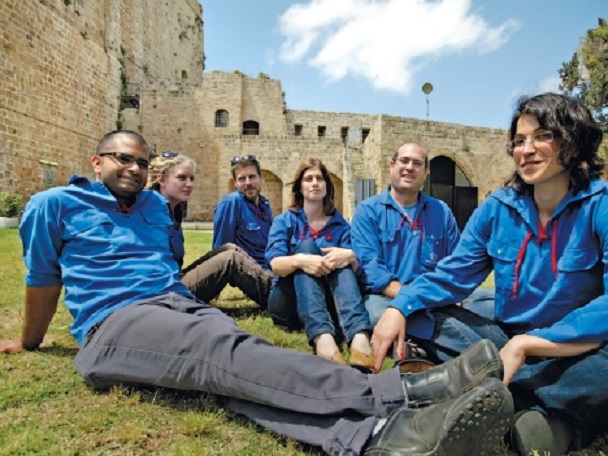
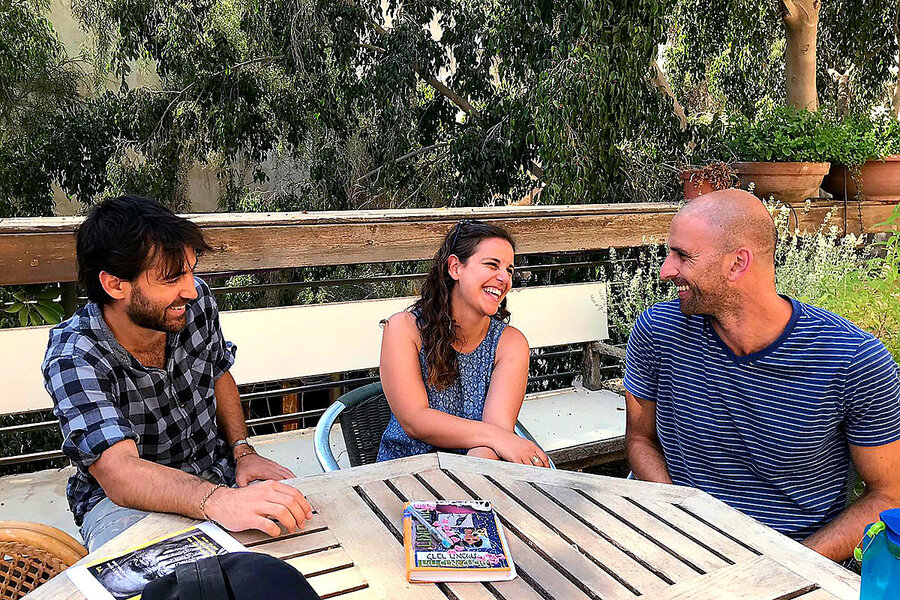
City Communes in Israel: Prolegomena to a Morphology of Urban Communalism
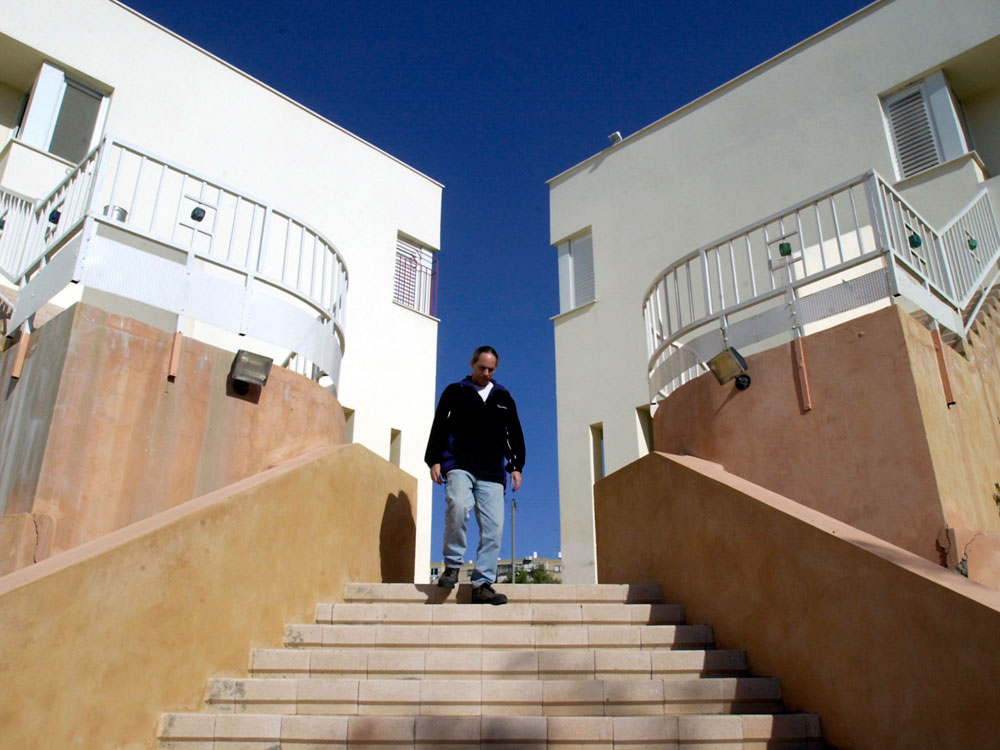
From Communal Societies, vol. 31 no. 2, Autumn 2011 (pp.21-44)
The erosion of confidence in the kibbutz lifestyle since the 1980s has engendered sweeping changes across the kibbutz movement. Recent kibbutz literature documents at length how the movement’s struggle to adapt to new realities has entailed a rapid and sustained jettisoning of many of the surviving vestiges of its communal heritage. By the end of the twentieth century, with privatisation looming, lacking institutional and cultural legitimacy in Israel and abandoned by former allies overseas, it appeared as though the end of the road had arrived for a movement once fêted as the world’s most successful example of communal socialism. The emergence of a new wave of kibbutz-style communes in Israel, however, external to the mainstream kibbutz federations but conceived as the continuation of their founding ideals, suggests that the abuccinations with which the ‘failure’ of the kibbutz has been proclaimed by its rightist critics, and by a new generation of leftists for whom a singular fixation on the larger Zionist context countermands any old-fashioned concerns with experiments in communal living, may yet be premature.
This new landscape encompasses upwards of 2000 people living in small, primarily urban communes in residential areas of towns and cities across Israel. Few of these are officially registered to the kibbutz movement but all are united by their adoption of classic kibbutz principles and their attempts to adapt these principles to the contemporary context. The passage of the phrase ‘new kibbutz movement’ into common parlance over the last two decades in reference to this new generation of communes is suggestive of the entrenchment of the urban commune idea and the increasing influence these communes are exerting in Israeli society.
This article gives an account of the emergence and consolidation of Israel’s urban communal scene, tracing the trajectory of its development from roots in parallel transformations in the kibbutzim and their environs since the 1940s, thereby establishing a contextualised cartography of the scene as it has developed. Taxonomic classification and detailed comparative analysis are beyond the scope of this discussion and thus necessarily kept relatively brief, but the historical overview presented provides a foundation from which to reflect on the defining features of the communes and on how they fit into the larger historical stream of socialist communal pioneering in Israel, as well as delineating the ‘new kibbutz movement’ as distinct from the many other communal and quasi-communal socioeconomic entities currently active in Israel. The phrases ‘classic kibbutz’, ‘established kibbutz’ and ‘traditional kibbutz’ are used somewhat interchangeably here to refer to the 269 kibbutzim established prior to the 1970s. Specifically this refers to the kibbutzim of TKM (The Kibbutz Movement), a union of the two largest pre-existing federations, TAKAM (the United Kibbutz Movement) and Kibbutz Artzi, which house around 94% of the kibbutz population (the remaining 6% accounted for by the orthodox religious Dati federation).
Early Experiments
Urban commune-type groups of various kinds were active in Palestine as far back the early Jewish migrations in the 1880s and by the time of the founding of the first kibbutz in 1910, numerous urban cooperatives were in operation throughout the Yishuv. Bakeries, laundries, transport companies and other ventures functioning along more or less communal lines were commonplace, and after 1920 the expansion of the Histadrut in urban centres expanded the scope for communally-organised cooperative projects.1 Specific groups from the pre-state period worthy of mention include the Bilu commune (1882), the Haskanism (Leadership), Blau-Weiss workshops (1921-26), the various enterprises of the Gedud HaAvoda (Labour Brigade, 1924-27) and Histadrut, Meshek Hapoalot (1924-27), Plugat Hayam (1926-27) and the Socialist Youth (Habacharut) (1932-42). Operating under different labels—communes, city groups, work conquest groups and so on—these groups all adopted some or other model of continuous cooperation in production and consumption, and all had what Israeli sociologist Dan Yahav describes as “a nucleus of members who had a deep social and political awareness and socialist pioneer spirit”.2 Urban pioneering, according to Yahav, was most prevalent during the Third and Fourth Aliyot (roughly 1919-1928), with working groups engaged in construction, office work, industrial plants, transport and other services. These groups were usually short-lived (lasting two to three years at the most), failing to endure due to the allure of the kibbutzim and moshavim, adverse economic conditions and crises arising from conflicts between ideology and the daily realities of urban life.3
Most of the abovementioned enterprises were directed towards preparing their members for rural communal life and/or accomplishing some or other specific task. As such it is difficult, genealogically speaking, to view them as direct antecedents of today’s urban communes. During the late 1940s, with industrialisation and expansion transforming the kibbutz movement and the institutions of the new state assuming responsibility for many of the tasks previously undertaken by the kibbutz federations, transformations in identity and self-image pursuant of shifts in function within a rapidly changing environment led to the emergence of a strain of thought, in parts of the movement, which held that for the kibbutz to maintain its influence in society it must be directly involved in urban areas of Israel. Efal (an acronym for Agudat Poalim Ivrit Leumit—‘National Society of Hebrew workers’) was the first self-identified attempt at creating a permanent, urban kibbutz-style group to emerge as a result of this period of questioning. Established in 1947 in a suburb of Tel Aviv, Efal was founded by a group of 200 North American olim affiliated to the Farband (Jewish National Workers Alliance), one of the many labour Zionist landsmanshaftn (Jewish mutual aid societies) active in the New York area.4 With financial backing from the Farband directed through the Histadrut, which decided to endorse the urban kibbutz idea, Efal emerged as an attempt to synthesise kibbutz life and an urban existence. In 1949 it officially joined the Kibbutz Hameuhad (United Kibbutz) federation. Though economically the commune remained healthy, a deterioration of internal relationships, combined with insecurity caused by the split in the kibbutz movement in 1951 and a general lack of support from the established kibbutzim led to a loss of confidence in the idea. After a while members began to seek different ways of life elsewhere. These departures had an immediate destabilising effect, and in 1952 the decision was made to disband.
Efal was the first community conceived as the foundation of a new, permanent social system based on the integration of the kibbutz model of communal living into an urban setting. This idea began to gain traction during the early period of statehood as the kibbutz movement struggled to adapt to the new realities of the post-Independence environment. During the 1950s, immigration from the eastern countries and North Africa radically transformed Israel’s demography and brought about new social conflicts. Participant accounts tend to locate the origins of today’s urban communes in the rift that developed in the 1950s between the kibbutz movement and the development towns built to accommodate the influx of Mizrachi (or ‘Oriental’) immigrants, principally from Morocco, Iraq, Iran, Egypt, Libya, Yemen and Tunisia. The development towns, located with the aim of distributing the new olim evenly across the national territory, and to expand the population of peripheral areas particularly, were established mainly in the Galilee region and the northern Negev. Most were located in areas with a high concentration of kibbutzim, the rationale being that the kibbutzim, as the ‘pioneering elite’ and the ‘strong population’, would help ease the absorption of the new immigrants. The kibbutzim’s acquiescence during the 1950s to Ben-Gurion’s demand that they open their factories and provide employment for the new olim, as well as being symptomatic of an incipient identity crisis in the movement engendered by its struggle to find its role in the new state, created additional contradictions and challenges with respect to the tensions that came to characterise the evolution of its relations with the development towns.5
From the outset the development towns found themselves marginalised on two fronts: firstly vis-à-vis the “remote and patronising political centre”, and secondly vis-à-vis their immediate neighbours, the kibbutzim.6 Tensions between kibbutz and development town arose from ethnic and socioeconomic polarisation: the kibbutzniks—mostly Ashkenazim, in control of land and organised in established federations—were in a position of considerable power compared to the new olim, who lacked material resources and organisational and political backing. That the development towns were dependent for their livelihood on the neighbouring kibbutzim and the regional cooperative of kibbutzim, which constituted their principal job market, engendered a high degree of alienation.7 This was compounded by hired workers’ experiences as employees in kibbutz enterprises where, while on the one hand the bosses claimed class solidarity with the workers, kibbutz members were still entitled to preferential treatment over outside workers, who found that their very presence constituted an ideological dilemma with regard to the kibbutz ethic of self-labour.8 Further impeding regional cohesion was the fact that, geographical proximity notwithstanding, the kibbutz was connected to the political centre through political parties and established movement structures, whereas the development towns felt completely isolated. Residents of the towns consequently identified the kibbutz with the establishment, and as a result the kibbutzim became foci for their resentment over their deprived conditions.
Efforts by the kibbutzim to ameliorate relations by providing the towns with cultural and community services (in 1978-79 around 2500 kibbutz members were engaged in voluntary community work in 25 development towns) were perceived merely as another attempt to increase the establishment’s control over the towns.9 Indeed, the reality, Ben-Rafael argues, was that the kibbutzim took for granted their self-segregation from the towns. By way of illustration he notes that the kibbutzim’s schools remained closed to children of the development towns, even during the early 1970s when interethnic integration headed the national education agenda. Such isolationism, inconsistent with the kibbutz’s self-image as revolutionary vanguard, made the kibbutz appear to its neighbours merely “a well-to-do group associated with a distinctive kind of lifestyle . . . a status group.”10 Rachel Shabi quotes several residents of development towns recalling their early experiences of nearby kibbutzim. One, the son of one of the first inhabitants of Sderot to arrive on the ‘boat to village’ migration from Morocco, recalls how “[w]hen the kibbutzes [sic] had leftover apples, a surplus, they would dump them and pour petrol over them so that we wouldn’t take them to eat or sell. . . . They were just mean. To this day, if I have an apple, I can still smell the petrol.”11 Another recounts that a nearby kibbutz “would catch kids taking water from its land, pour the water away, and lock the children in a hut all day as punishment.”12 Stories like these abound, representing, as Shabi notes, “a stark contrast to the idea of kibbutzes [sic] as Jewish socialist flagships.” In some Mizrachi circles, she continues, “kibbutznik…is shorthand for racist and hard-hearted.”13
This reality became problematic for the kibbutzim. Some in the movement echoed the rising chorus of voices on the outside criticising the kibbutzniks’ hypocrisy in living opulent and increasingly isolationist lifestyles while continuing to project the image of progressive egalitarians. To the young generation growing up in the kibbutz of the 1960s and 1970s, raised on socialist values, the kibbutz’s self-segregation and patronising, exploitative and often overtly racist attitude towards its neighbours represented a serious ideological contradiction. Nomika Zion, founding member of Sderot’s Urban Kibbutz, Migvan, recalls her unease about the relationship her kibbutz, Reshafim, developed during the 1960s and 1970s with the North African immigrants of the neighbouring development town of Beit She’an:
As a child, I was restless. I felt that something was wrong. There was only one field between the kibbutz and the town, but there was a whole world between us. The kibbutz surrounded itself with a fence. In due course, the fence became a wall, a psychological and emotional barrier between the kibbutz and the town. The prejudices and stereotypes were perpetuated because we didn’t meet each other. Over the years we became more and more alien to each other and the stereotypes got stronger and stronger. I wanted to break down this wall.14
The Urban Kibbutzim
The dissonance between the kibbutz’s socialist rhetoric and its inequitable treatment of its neighbours can be seen as the first and most significant factor in the genesis of the Urban Kibbutz idea. An important turning point in the kibbutz’s relations with the development towns came in the 1981 general election campaign.15 Likud’s initial rise to power four years earlier, often seen as the beginning of the kibbutz movement’s current problems, was attributable primarily to the Yom Kippur war fiasco rather than a substantive change in national ideology or general problems within MAPAI/Labour. Had it not been for the war Mapai would likely have retained power for another seven to ten years, but in the event, a protest vote against Labour’s handling of the war fused with Mizrachi-left discontent and religious conservatism to win Likud, under the leadership of Menachem Begin, its unprecedented victory. By 1981, however, the development towns’ situation had not much improved.16 Though Begin had no clear ideological objection to the kibbutz (he hated the kibbutzniks for ghetto-type reasons rather than any particular ideological ones) the anti-kibbutz rhetoric that formed the backbone of his 1981 campaign platform successfully exploited working-class Mizrachi resentment towards the kibbutzim and the Labour party to which they were affiliated (to Oriental Jews, symbols of economic exploitation, the affluent ‘first Israel’ Ashkenazi aristocracy) to win Likud a second term. Analysts of Israeli society identify the 1981 campaign as the zenith of the development towns’ hostility towards the kibbutz, kibbutzniks accused in campaign advertisements of being (among other things) “bloodthirsty beasts” feeding on the development towns. This hostility continued after the election, the public debate in the autumn of 1981 after Begin’s famous denouncement of kibbutzniks as ‘millionaires with swimming pools’ intensifying extant frictions and exacerbating the estrangement of kibbutz and development town.17
A milestone in kibbutz/development town relations, the 1981 election is also seen by founding members of today’s urban communes as a decisive turning point in the evolution of the Urban Kibbutz idea, illustrative of an innate correlativity between the two historical trajectories. Nomika Zion describes how, at the time of the election, she was working in the leadership of the Hashomer Hatzair youth movement as a teacher and social worker in deprived neighbourhoods of Netanya and the nearby development town of Kadima:
All the people I was working with at the time came from Morocco and other North African countries, and I remember I received so much hatred, so much hostility—not for me as an individual, but for me as a symbol: kibbutznik; Ashkenazi; Labour party. I remember how they treated me in those slums in Netanya. At that moment I made a decision that I was going to change my life, that I was going to create a new model of life and a new dialogue between myself and this public that hates me so much.
It is worth bearing in mind here that there had, by 1981, been a smattering of abortive attempts to start urban kibbutzim by groups seeking to remedy the kibbutz’s incipient withdrawal to the periphery of society. One notable effort occurred in 1968, when a group of 24 alumni of the Habonim (Builders) youth movement established a community in the development town of Carmiel in the Beit HaKerem Valley. Carmiel was among the first cities in Israel to be established according to an urban master plan, built in 1963-64 as part of the Central Galilee Development Project. The Habonim group, Garin Sha’al (literally ‘footstep’, also an acronym for Garin Shitufi Ironi LeCarmiel, ‘the Urban Cooperative Garin to Carmiel’), never explicitly called itself a kibbutz, but considered itself “an integral part of the kibbutz movement”. One member, Gary Ben-et, describes how the Carmiel commune was the culmination of a period of “ideological struggle” within Habonim during the 1960s, as members began to “question the meaning of pioneering and the role of the kibbutz movement, which they saw as increasingly isolated in Israeli society.” Sha’al felt that “for the kibbutz movement to maintain and increase its influence in Israel, it must be directly involved in urban Israel. It must establish collective groups in Israeli towns.”18 The group was allocated a neighbourhood of sixteen apartments, one of which was converted into a meeting room and another into a day-care centre. Members pursued their own chosen professions in the group’s environs—primarily in the immediate vicinity, though in some cases as far away as Haifa—and deposited their salaries into the community’s collective treasury, from which equal allowances were distributed. In a further crucial departure from the traditional kibbutz model the community was organised around the family unit: meals were prepared and eaten in individual family apartments, with the communal meeting room reserved for Sabbath meals and holiday celebrations. While maintaining a tight-knit society among its members, incorporating “all the traditional features of kibbutz democracy,” according to Ben-et, Sha’al saw its main goal in Carmiel as political. “We wanted to influence the course of life in Carmiel and the direction of the town’s development. Sha’al members were active in all aspects of the town’s political, social, and cultural life. . . . The group was very outwardly directed.”19
After first organising in 1964, for four years Sha’al struggled for official recognition from the kibbutz movement. Despite the support of World Habonim, this recognition was never received. Lack of support and guidance from more experienced people in the kibbutzim, combined with the city’s rapid expansion and Sha’al’s failure to grow (the initial garin was joined by a small group from South Africa, but an anticipated second wave of reinforcements from the U.S. never materialised) left the group isolated and limited the influence it was able to exert on the surrounding area. Eventually the internal pressures of group life, combined with the failure to establish a substantive economic foundation, became overwhelming, and in 1972 the commune disintegrated. Similar communities in Jerusalem, Haifa and Herzliya likewise proved unable to integrate into their surroundings and although managing to persist in various forms, in effect simply became ‘kibbutzim near towns.’ By 1981 the only such community that had shown any longevity was Kibbutz Reshit. Established in 1979 by two brothers in the Kiryat Menahem area of Jerusalem, Reshit began as a mixture of secular and religious groups working together to create an alternative model of communalism to that of the mainstream kibbutz, and provided both inspiration and template for what would, during the 1980s, become known in Israel as the Urban Kibbutz. In 1987 Nomika Zion and five other bnei meshek established a similar community in Sderot, a development town in the north-west Negev with a 10,000-strong population composed mainly of new olim from Morocco, Romania and Poland. The community, Kibbutz Migvan—the second of Israel’s four current Urban Kibbutzim—lived in rented apartments in the slums of the city until the mid-1990s, when they purchased a plot of land and designed and built their own accommodation, to which they relocated in 2000. A similar model was adopted, also in 1987, by members of Kibbutz Tamuz in Beit Shemesh, a development town in the Judean hills, 20 km west of Jerusalem. After 12 years based in rented apartments, Tamuz relocated to permanent, purpose-built accommodation in 1999. In the early 1990s Reshit split into two communities, the new group, Beit Yisrael, becoming the fourth Urban Kibbutz.
Tnuat Bogrim
The belief that the future of the kibbutz lay in its integration into urban environments gained traction during the 1980s. Following the path blazed by the Urban Kibbutzim, the second main actors in shaping today’s urban communal scene were the socialist Zionist youth movements who, having historically been involved in the building of kibbutzim and an important reservoir of recruits for the movement, were prompted by the kibbutz’s incipient abandonment of its communalist ethos during that decade into a process of ideological redefinition. This began in Histadrut Ha’noar Ha’oved Ve’HaLomed (The Federation of Students and Working Youth, aka Ha’noar Ha’oved, or NOAL), the largest of Israel’s sabra youth movements. Sister movement of Habonim Dror and the Labour Zionist movement, and a member of the International Falcon Movement—Socialist Education International (IFM-SEI), NOAL was founded in Palestine in 1924 by working youth to defend their rights. Its heyday as a pioneering youth movement was in the 1950s and 1960s, but along with the Histadrut and the labour movement in general, it subsequently found itself relegated to the sidelines. Having historically viewed kibbutz life as the ultimate fulfilment of its ideology, NOAL saw the kibbutz’s abandonment of its communal socialism during the 1980s as leaving its graduates without a means of achieving hagshama (loosely, ‘self-realisation’) or any real forum for effecting change in society. Seeking an alternative outlet for their ideals, and drawing inspiration from the Urban Kibbutz idea, movement graduates of the 1980s came to see the creation of new, intimate urban communes—kvutzot (sing. 'kvutza’)—as a means of achieving hagshama by living out movement values in their daily lives. Rather than integrating into existing kibbutzim, they decided to continue their intimate group life as separate new adult communities after graduating from the movement and the military. Thus began the emergence of a stream of “intimate, consensus-driven, anarcho-socialist groups”20 embedded in residential urban areas of Israel. This trajectory began in 1981 with the creation of NOAL’s preparatory farm (havat hachshara), gathered pace around 1988 with the institutionalisation of the preparatory farm track, and solidified in 1994 with the establishment of Kibbutz Ravid, the movement’s economic and ideological centre.21 During the 1990s, alumni of other socialist Zionist youth movements began to form kvutzot along similar lines. By the early 2000s Hashomer Hatzair had a total of around 50 people living in groups in two urban centres. Israeli youth movement HaMachanot HaOlim (Camps of the Immigrants)22 had groups in two centres with a total membership of around 50; Kvutzot Habechira (Groups of Choice), an Israeli youth movement, had eight groups in two towns in the Galilee comprising around 60 members. Habonim Dror had four groups, whose membership, mainly olim from the UK, the US, Mexico and Australia, numbered around 18 and was based in three centres. The remaining 75% of the 1500-strong scene then consisted of NOAL’s kvutzot.23 This ratio remains roughly accurate (see later). Over the last decade these youth movement communes have begun to fuse together into larger conglomerates, termed ‘kibbutzim of kvutzot’. Although some, e.g. Ravid, Eshbal and Na’aran, are located in rural areas, these clusters are mostly in urban settings and call themselves ‘urban kibbutzim of kvutzot’. In contrast to the Urban Kibbutz (a singular collective) this phrase denotes an affiliation of small groups: a ‘collective of collectives’, organisationally, ideologically and in many other respects distinct from the Urban Kibbutz.24
In 2000 the various groups forming across Israel began to organise under the aegis of Ma’agal Hakvutzot (The Circle of Groups). Conceived as a framework for dialogue between groups, including movement-affiliated kvutzot, Urban Kibbutzim and a small number of unaffiliated communities that were beginning to form along similar lines, Ma’agal Hakvutzot came into being as a result of conversations between members of youth movement kvutzot Bustan and Tishrei (both from Habechira), Yovel from Habonim Dror, Limonim and Na’aran from HaMachanot HaOlim, and three of the Urban Kibbutzim: Tamuz, Migvan and Beit Yisrael. Every month for around two years, interested parties from any group would visit one of the other groups, exchange views and learn about different groups’ lifestyles. The involvement of increasing numbers of people set in motion a chain of developments which have since altered Ma’agal Hakvutzot’s character and function. Firstly, several new independent kvutzot appeared on the scene and became involved in the organisation, which, for reasons discussed later, immediately affected Ma’agal Hakvutzot’s character. Secondly, kvutzot from NOAL, which as a whole had no real connection to Ma’agal Hakvutzot, also began to take an interest. Specifically this was a group in Be’ersheva (Eshkol Be’ersheva) and a group in Afula (Garin Adom), both of which for a time ended up being in both NOAL and Ma’agal Hakvutzot. Ma’agal Hakvutzot viewed the involvement of Garin Adom and Eshkol Be’ersheva positively. Their presence and enthusiasm reinforced the idea that Ma’agal Hakvutzot could become a cohesive and inclusive framework for developing communication and mutually supportive relationships between all those active in the scene. But their involvement created tensions in NOAL, in whose view they and Ma’agal Hakvutzot were a mismatch. Mainstream opinion in NOAL, a strong, unified and sizable movement, held that if it were to be involved in Ma’agal Hakvutzot, with its 1000+ membership and 60-70 kvutzot it would drown out the 500-strong Ma’agal Hakvutzot completely. In the event, Garin Adom left NOAL but stayed in Ma’agal Hakvutzot (it later split off completely). Eshkol Be’ersheva split three ways; some of its members stayed in NOAL, some split off and left the scene while others formed what became Kehillat Kama, a group in Be’er Sheva composed mainly of ex-NOAL members who left NOAL to build a community more akin to the Urban Kibbutz. Kehillat Kama remains in Ma’agal Hakvutzot.
Meanwhile, each of the movement-affiliated groups who had been involved in establishing Ma’agal Hakvutzot, all still in their formative stages at the time, began succeeding in their attempts to replicate themselves as younger students graduated from their youth movements. Bustan evolved into ten separate kvutzot; a group from HaMachanot HaOlim in Na’aran managed to renew their youth movement and began building more communes; Na’aran likewise became much larger and its members started building kvutzot in other parts of the country. These successes diverted the energies of the founding groups away from Ma’agal Hakvutzot: for the older Tnuat Bogrim, being able to produce more kvutzot, taking responsibility for and building relationships with these groups was naturally of greater importance than cultivating communication and relationships with simply anyone and everyone living communally in Israel. With a shift in focus from cross-movement contact towards building their own movement, Na’aran, Bustan, Tishrei and the other founding groups gradually disengaged from Ma’agal Hakvutzot. At the same time, several independent groups—kvutza-type communes emerging independently of a youth movement background—were becoming more involved in the organisation and altering its complexion in numerous different ways. These groups brought a different approach to communal living, often being less strictly dedicated to economic cooperation for example, and also not being part of the larger structure of the movement frameworks which in turn engenders different views on the nature and structure of inter-group
relationships. Their presence thus immediately created new axes of tension and debate within Ma’agal Hakvutzot. It created another problem too: the issue of representation. Whereas the movements voiced concern about the organisation speaking on their behalves, the independent groups, being small, isolated communities without the security provided by the youth movement framework, often felt they needed somebody to speak on their behalf. Linked to this is the fact that, given Ma’agal Hakvutzot’s decision-making structure, which took the form of meetings of representatives of each kvutza or movement, continuing along its initial trajectory would have led to a situation in which, sitting around a table of fifteen people would be one person representing NOAL’s 1000-strong Tnuat Bogrim, and another representing a group of five or six individuals in an independent community, whose day-to-day dilemmas are very different to those faced by the movement-affiliated kvutzot.
A liminal moment in Ma’agal Hakvutzot’s evolution came when members of HaMachanot HaOlim youth movement kvutzot from Na’aran succeeded in building Horesh. Situated in the Kiryat Yovel neighbourhood of Jerusalem, Horesh split from HaMachanot HaOlim over disagreements about what it means to be in a movement as opposed to being an independent kvutza (a discussion centring on questions of centralisation vs. independence). After leaving HaMachanot HaOlim Horesh remained intimately involved in Ma’agal Hakvutzot. This took place around the time as the splits in the NOAL groups in Be’er Sheva, with half of the NOAL kvutzot in the town leaving NOAL and continuing in Ma’agal Hakvutzot and the other half remaining in NOAL and not in Ma’agal Hakvutzot. Further north, the NOAL group in Afula also broke ties with the youth movement and continued in Ma’agal Hakvutzot. With Ma’agal Hakvutzot finding itself increasingly composed of independent groups, and the movement groups remaining in Ma’agal Hakvutzot finding themselves in an environment progressively less equipped to meet their needs and instead having to become more supportive of the independent groups, the pressure mounted in various different ways to the point when, in 2007, the organisation’s steering committee decided that the best course of action would be to separate. The independent groups’ need for an overarching structure was felt to be greater than that of the movement kvutzot, given that the latter already had a framework in place in the form of their youth movements, whereas for the independent groups Ma’agal Hakvutzot was the only substantive means of inter-group contact. The organisation’s leadership decided that its efforts should be focused on fulfilling this function rather than on carving it into a structure capable of unifying every last communal group in Israel. The youth movements and Ma’agal Hakvutzot have since been focused on building their own respective communities and networks—the movements strengthening their own
networks of kvutzot and Magal Hakvutzot concentrating its efforts on building a movement of kvutzot in order eventually to create conditions under which Ma’agal Hakvutzot and the movement communities might be able to sit together on an equal footing.
The Contemporary Communal Scene25
In the foregoing account of the development of the urban communal scene we can see the consolidation of the two broad streams of communalism which comprise the scene as it exists today. The largest of these is the youth movement sphere: strong, unified, compact, relatively linear systems, the movements are seen by most as the backbone and ‘hard core’ of the scene. Following a merger of Kvutzot Habechira and HaMachanot HaOlim, as a result of which Kvutzot Habechira no longer exists as a movement, this sphere now includes kvutzot formed by alumni of five movements: four socialist Zionist movements (NOAL, HaMachanot HaOlim, Habonim Dror and Hashomer Hatzair) and a new network formed in 2005 along the youth movement pattern, known as Garinei Omanuyot (‘Seeds of Art’). Of these NOAL remains the largest single network, with around 1000 members living in 60-70 kvutzot, in addition to its educational kibbutzim, Ravid and Hanaton in the Lower Galilee and Eshbal in Gush Segev. Garinei Omanuyot is effectively a socialist Zionist cultural movement composed of a network of artists’ communities aiming to effect social change through art and education in their environs. Garinei Omanuyot grew out of the matnasim (community centres) which run workshops in art, dance, drama and music, with groups who coalesced there going on to do military service together and subsequently adapting the Tnuat Bogrim commune model on graduation from the military, thus mimicking the pattern of the youth movements. Given its adoption of both the individual commune model and the movement structure itself, and given the growing cooperation between its members and the Tnuat Bogrim, Garinei Omanuyot can be viewed within the same frame of reference as the socialist Zionist movements. By 2009 it had upwards of 200 members living in kvutzot across Israel, its most well-established groups based in Afula, running informal education projects including theatre groups, after-school clubs and cultural centers in schools for underprivileged youth.
The Tnuat Bogrim communities are all more or less one ‘model’ of communal group, subdivisable inasmuch as differentiations arise from differences of movement affiliation. Each of the movements is a framework for the kvutzot it encompasses, and each constitutes a specific network of communities with a specific identity, flag and ties according to the movement in which their members grew up26/27. The groups’ rate of replication and qualitativity in terms of pioneering social activism, economic socialism and the intensity of the relationships members are pushing themselves to form find their apotheosis in the movement sphere. Their wider influence is evident in the recent groundswell in non-movement-affiliated communes forming in deprived urban areas, attempting to create alternative lifestyles while working in social projects in their environs. Alongside the movement sphere, the independent sphere of the scene, over which Magal Hakvutzot acts as a kind of loose framework, comprises two broad subcategories of community:
1. Urban Kibbutzim: Tamuz, Migvan, Beit Yisrael, (Reshit).28 These can really only be categorised separately due to a) their age and b) the fact that they are registered within the kibbutz movement and thus officially recognised as legal entities. The legal framework delineated by the Rasham HaAgudot HaShitufyot (Registry of Cooperative Societies) classifies ‘kibbutz’ as a subcategory of ‘cooperative organisations’, and ‘Urban Kibbutz’ as a subcategory of ‘kibbutz’. Urban Kibbutz is defined in the kibbutz society regulations as “[a] cooperative society that functions for social contribution to and participation in Israeli society, organised on principles of self-labour and of cooperation in income, consumption and education on the basis of its members’ equality.”29 The Urban Kibbutzim are seen by members of other groups as relatively ‘static’ entities, a lifestyle choice on the part of individuals seeking to create a socialist community and be involved in the surrounding society. Unlike the movement kvutzot, which, while stressing the centrality of kibbutz as a focal point of community also emphasise their desire to create a movement for change, the Urban Kibbutzim are not explicitly looking to replicate themselves and are thus seen rather as ‘one-generational’ communities.
2. Independent Kvutzot. While not a qualitative definition, this is effective shorthand used by most within the scene to describe a plethora of small, urban commune-type communities unaffiliated to any movement structure. These groups generally take their model and template from the Urban Kibbutz and generally speaking aspire eventually to become something akin to the Urban Kibbutzim.
A rough estimate would put the total number of people within Ma’agal Hakvutzot and Tnuat Bogrim groups combined at around 2000.30 At the time of writing, the divisions and subdivisions outlined above continue to hold, both in the scene as a whole and within its constituent spheres, but the minutiae of the individual groups are changing constantly. The pace of change has been particularly rapid in the independent sphere. In 2008 Ma’agal Hakvutzot included twelve kvutzot, with an additional three in the process of joining. A change the organisation’s leadership at the end of 2007 has seen the range of groups it encompasses widening. The new personnel had been involved with Kehillot Shachaf (known locally just as Shachaf), an umbrella organisation formed by a group of trust funds and other philanthropic organisations in an attempt to stay connected to all the different communities springing up across Israel. Though similar in some respects to Ma’agal Hakvutzot, Shachaf caters for a varied range of communities, including non-socialist, non-cooperative groups (e.g. religious groups and others unconnected to socialist pioneering). Initially the new leadership intended to broaden Ma’agal Hakvutzot so as to make it inclusive of all manner of groups, and when in early 2009 Ma’agal Hakvutzot was, in effect, taken over by Shachaf, its scope broadened dramatically. Almost all the groups in Ma’agal Hakvutzot are now counted as part of Kehillot Shachaf. Though not unproblematic, this involvement has not (yet) come at the expense of the individual communities’ autonomy and has generally been well-received by the groups themselves (those running it being from communes themselves seen as limiting the potential for damage). Shachaf’s involvement has in practice enabled more interaction, cooperation and communication between communities in the form of joint seminars, communal learning and other activities.
* * *
The current wave of communalism has its roots in parallel sociohistorical processes in the kibbutz movement and in outside society; the scene has a double origin: the desire to create a social model that would make the kibbutz idea more relevant both to Israeli society and to members’ own needs as individuals. In the debates and schisms that have shaped it—over the last decade in particular (the evolution of Ma’agal Hakvutzot a case in point)—there are unmistakable echoes of the early development patterns of the original kibbutz movement. The scene’s evolution has seen the growth of intergroup reciprocity and communication networks, with groups linking together according to ideology, political affiliation and conception of communalism. Denizens’ use of the term ‘scene’, however, is a choice of terminology uniquely apposite to the topography of this new landscape. Inferring dynamic, interconnected yet constantly shifting activity produced by groups and individuals for whom the scene provides a particular lifestyle, social network and identity, a sense of purpose, status and prestige and a framework for communicating emotions and ideas,31 rather than being a ‘movement’ per se the ‘scene’ is an informal, hazily demarcated generative setting in which symbols, lifestyle and collective intelligence are formed and crystallise in physical loci of interaction that give it its physiology and visibility. Within this dynamic formation, with its crossovers of personnel and ideas, shifting unifications and divisions and polymorphous webs of interlinking networks, a broad commonality of purpose crystallises into a multifarious range of structures reflecting diverse backgrounds and motivations. The communities exist in varying degrees of federation with varying degrees of intergroup mutual aid. In the case of the youth movements—whose networks of kvutzot, unlike the independent communities, can be seen as movements in and of themselves—cooperation is mainly between kvutzot within each movement, all the groups regarding themselves as partners and bound together in a relatively strong federative structure in the form of the youth movement frameworks. The movement kvutzot have a relatively high level of contact and cooperation with other kvutzot of their own movement in terms of their daily social activism, financial cooperation and joint learning frameworks. Though each group’s main point of cooperation is with others of its movement, such bonds of mutual aid as exist between kvutzot of the same movement in varying degrees transcend movement boundaries,32 the rapport between movements founded on partnership and dialogue. Partnership and dialogue exist between movement and independent groups also, but intersphere collaboration is in practice evident to a markedly lesser degree. Within the independent sphere itself the level of intergroup cooperation has generally been relatively low, Ma’agal Hakvutzot being more a loose umbrella framework than the solid institutional structure provided by the youth movements, although, as noted above, the involvement of Kehillot Shachaf has engendered certain changes in this regard.
The scene’s expansion over the last decade, and in particular the changes in the already relatively heterogeneous independent sphere, limits the extent to which the new landscape can be conceptualised in taxonomic terms. On the other hand, bearing in mind the impossibility of substantive comparative analysis in the context of this article, some cursory remarks can be made as to certain shared features suggestive of a commonality of aims and understandings that transcends structural and affiliational differences.
1) Emphasis on the small group. All of the groups place a heavy emphasis on social intimacy and thus tend to have limited ambitions towards expansion. This links to the debates in the 1910s, 20s and 30s, between proponents of the ‘big kvutza’, organised around Yitzhak Tabenkin, Shlomo Lavi and the Gedud HaAvoda (which in 1924 became the Kibbutz Hameuhad federation) and advocates of the intimate kvutza idea (A.D. Gordon, the Second Aliya kvutzot, which in 1925 became Hever HaKvutzot [Association of Kvutzot], and the Hashomer Hatzair groups of the early 1920s). As a result of formative experiences in the established kibbutz movement, the founders of the Urban Kibbutzim revived the classic case for the intimate kvutza, viewing the preservation of dialogue skills as the sine qua non of community and this being conditional on keeping the group as small as possible. The same pattern is adopted by the Tnuat Bogrim groups, whose use of the term ‘kvutza’, a direct reference to the small groups of the 1920s and 30s, signifies the primacy of intimacy to their ethos. Membership usually ranges from around 10 (in the case of the kvutzot—movement affiliated and independent) to 100 (in the case of the Urban Kibbutzim). In the instances where kvutzot have fused into kibbutzim of kvutzot, emphasis remains on the kvutza within the larger structure. This is deemed crucial in enabling constant dialogue and face-to-face relationship-building, the rationale being that the larger the group, the less it is able to maintain a high degree of trust and openness. Hence while the kibbutzim of kvutzot are expanding, their constituent kvutzot are conscious of keeping their membership limited. Deemed a necessary platform for maintaining dialogue skills, the intimacy of the group also subverts the need for voting as the central democratic institution. Believing democracy to be conditional on individuals’ active engagement in the political process, decision-making takes the form of direct democracy, with varying degrees of emphasis on consensus and maximal involvement of all members in the deliberative process via multiple formats of meetings and discussion forums.
2) Personal Freedom. Typical of the new permutations of kibbutz that emerged from the 1970s onwards is a pervasive emphasis on individual self-determination, or perhaps more accurately the attempt to reconcile individualism and communalism. This must again be viewed against the backdrop of transformations in the mainstream kibbutz post-1948. By the 1970s, individual freedom in the kibbutz was increasingly seen as coming under threat from the formalisation and institutionalisation of General Assembly decisions and the subordination of the individual to the authoritarianism of kibbutz bureaucracy. Historian and kibbutznik Avraham Yassour suggests that by the early 1980s these changes were subverting the “continual development and readjustment which are vital to the existence of the kibbutz as a voluntary communal society”33,34. Employing no formal authority mechanisms, group life in the new communes is based on mutual aid, mutual trust, mutual responsibility and individual liberty. Although different groups have different conceptions of precisely what this means (Urban Kibbutz members for instance would regard the movement kvutzot as considerably ‘too communal’ for their taste), groups of all streams stress members’ freedom to develop according to their own personal needs and desires. In his chapter on Tamuz in his book The Kibbutz: Awakening from Utopia (2000), Daniel Gavron notes how notions of “sacrifice for the common cause, the subservience of the individual to the group, the personal deprivation for the sake of the superior communal goal” are absent.35 Migvan’s Nomika Zion concurs: “The only reason for being part of a collective is if the collective gives you more support to fulfil your dreams. . . . [E]veryone wants his or her own life and everybody respects the other. The collective exists to serve and support the individual, not the other way around”. One indicative feature of the communes in this respect, particularly in light of their historical lineage, is their retention of the family unit. Whereas the classic kibbutz stripped the family of almost all functions, the community supplanting the family unit as the main source of socialisation, the retention of the family in the new communities suggests a range of freedoms preventative of the collective’s control over the individual becoming anywhere near ‘total’, as in the classic kibbutz, preventing the community becoming, in Goffman’s terms, a “forcing house for changing persons.”36 Although in their day-to-day activities, participatory decision-making procedures, group learning and so on the communities are, by any definition of the term, ‘communal’, the communes, often spread across entire neighbourhoods, essentially consist of private houses (in the Urban Kibbutzim) or shared apartments (the movement kvutzot).
3) Outward focus. All of the new groups are driven by the idea of impacting in a positive way on the surrounding society, sharing a common focus on reaching out to the populations around them via educational and social initiatives in the towns in which they are based. This is a response to transformations in the kibbutz movement’s relations with society over the latter half of the 20th century, as gradual staticisation and isolation saw the movement unable to maintain the dynamism of its relationship with its environs and thus ceasing to exercise a formative structural effect on its surroundings. Reviving the classic socialist Zionist conception of the commune as a vehicle for fusing national renewal and socialist construction, with twin roles as principal carrier of national challenges and model of the revolutionary utopia, in the new communes the group is directed outwards. Their mission is seen as being in the sphere of education and social issues, engaging in formal and informal education work in their surroundings directed at helping weaker social sectors and struggling for “a more just, democratic and tolerant society.” NOAL’s projects, for example, include running a boarding school for disadvantaged youth (Eshbal), teaching English to Arab children, museum guiding, establishing and running democratic schools, legally representing the rights of working youth and establishing seminar centres in areas characterised by poor socioeconomic conditions. NOAL groups are active in particular in the Arab and Druze sectors, where they operate various educational activities including seminars, continuing education, camps and excursions, as well as the movement’s local-level daily activities. Exceptional due to its size and scope is Kibbutz Migvan’s Gvanim Association for Education and Community Involvement, the kibbutz’s NGO, established in 1994 as an umbrella organisation to provide a professional anchor for Migvan’s volunteer initiatives. Gvanim has steadily assumed greater responsibility for different areas of the city’s life to the point where it now has as much as, if not more than the municipality has to do with provision of welfare and social services in Sderot. Gvanim has developed a communal concept of how to run the city based on the idea of “partnership in the delivery of services”, and in 2010 had around 250 people from the city and the surrounding area on its payroll. The association operates around 50 projects at any one time in the fields of education, welfare, immigrant absorption, development and management of services for the disabled, programmes for children and high-risk youth, community organising in the Caucasian sector (FSU olim) and the development of a model for community-based volunteer programmes for other communities. It also runs a trauma centre, therapy and psychological help for those affected by the rocket attacks from Gaza to which Sderot has been subjected since Disengagement in 2005, and is involved, along with Joint Israel and Ashelim, in developing national programmes in the fields of volunteerism and special-needs youth inter alia. In 1996 Kibbutz Tamuz established a similar NGO, Kehilla, to develop projects in social involvement and to promote dialogue between the diverse population groups in Beit Shemesh. Working to aid weaker social groups through community organising, Kehilla runs study groups for children and adults in an attempt to cultivate community frameworks to contribute to the empowerment of the town’s residents, and to counter the processes of alienation and disintegration of social frameworks in society. Groups in all sectors of the communal scene have set up similar NGOs.
4) NGO as revenue source. Economically the groups tend to function more or less communally; in the Urban Kibbutzim and movement-affiliated kibbutzim of kvutzot, salaries are pooled into a communal account and monthly personal/family budgets allotted to members on the basis of family size or, in the kibbutz of kvutzot, kvutza membership numbers. The communities’ economic bases per se, however, are an important point of departure from the classic kibbutz model. Some groups do have their own means of production: Kibbutz Mish’ol has a cooperative catering company and a cooperative IT company, Na’aran has a date farm, Ravid has a brick factory and all the movements have cooperatively-run seminar centres that are a source of income. The majority of the groups’ income, however, derives from their Non-Profit Organisations, through which revenues come from local government and/or philanthropic organisations. Most have sought to develop some or other model of cross-sector partnership, though for ideological reasons the movement kvutzot tend to be more intransigent in emphasising the state as source of revenue. Among the largest and most longstanding examples are Tamuz’s Center for Cooperative Learning and Migvan’s Gvanim Association, the latter by far the largest NGO on the scene. Existing as an integral component of the Third Sector, the communities’ economic foundation is at once a decisive departure from the classic kibbutz—their lack of a substantive means of production strip them of their predecessors’ potential as counter-economic forces in the classical sense—and wholly consistent with the historical centrality of non-state actors in the creation and maintenance of Israel’s infrastructure, and in particular the infrastructure for the national systems of health, education and welfare services.
A New Kibbutz Movement?
It has been emphasised already that the diversity of communal forms involved in the new communal scene renders generalisation beyond the particular problematic, but from the foregoing overview we may draw a number of theoretical observations. Notwithstanding their many points of difference, the various communities constitutive of the new communal landscape all fall into that genus of community which Rosabeth Moss-Kanter defines as ‘service communes.’37 They also incorporate features of at least two of the models defined in Andrew Rigby’s sixfold typology of communalism: self-actualising communes (seen by their members as “contributing to the creation of a new social order” by providing in their internal life “that environment in which their members feel most free to discover themselves and develop their individual creative potentialities”38) and, Rigby’s equivalent to Kanter’s service commune, ‘activist communes’ (defining their institution’s function as “providing an urban base from which they can directly involve themselves in social and political action orientated towards the wider community”39). They can be seen to be engaged—very consciously so in the youth movements’ case, less deliberately in the case of the other communities—in what effectively amounts to a revival of the core tradition of the Palestinian-Jewish labour movement, namely the “synthesis between social struggle and socialist construction.”40 What unites these groups, and what distinguishes them from other commune-type entities, enabling a more precise delineation of the parameters of the otherwise somewhat nebulous honorific ‘new kibbutz movement’, is their fusion of a distinctive communal culture and informal life structure and their extension of these outwards into the society around them. Their simultaneous instantiation of Rigby’s two genres of community thus represents two indivisible strands of influence: on the one hand their daily activities in their surroundings, which are seen as ‘symptomatic’, in that the projects they operate deal chiefly with the symptoms of social decay (not unlike the many foundations and charitable organisations active throughout Israel); on the other hand, the centrality of community, or ‘kvutza’: the realisation of an alternative societal model through the ‘organic’ reconfiguration of interpersonal relationships. Internal intersubjective relations fulfil both an intensive and an extensive (or projective) function, considered as vital to the community’s outward function as to its internal character. Thus contributing to what members see as the processual creation of a new socioeconomic infrastructure, the communal life of the kvutza and day-to-day social projects in their surroundings are regarded as mutually reinforcing pillars of an activism deemed a natural extension of the classic kibbutz approach to socialist construction: a creative process focused not on confrontation with or dismantling of the dominant order, but on building within it. While the communities’ makeup otherwise varies widely between models, between movements and between kvutzot, it is the combination of the two sides working in unison that defines them as entities distinct from other communal forms of association, which in most cases tend only to exhibit one or the other face.
There is a tendency among some advocates of the ‘new kibbutz’ communes to view the classic kibbutz as ‘out’, and the ‘new kibbutz’ as ‘in’. To an extent this viewpoint perhaps has some validity given the trajectory the kibbutz movement seems to be on, but it has certainly not been the intention of this article in any way to suggest that the mainstream kibbutz movement is bereft of sociological, or indeed political, relevance. The kibbutz movement has not ‘failed’. It has, however, struggled to adapt in the face of the numerous challenges with which it has been confronted over the last half-century. Whether or not the members of the new kibbutz communes are merely tempting fate by describing themselves as the ‘new kibbutz movement’ remains to be seen, but either way, the communities these urban communards have built, and are building, are an important new development in the history of the kibbutz idea, and as such a crucial avenue of exploration if this idea is to retain its vitality and its relevance in the 21st century.
NOTES
1 Warhurst, Christopher, Between Market, State and Kibbutz: The Management and Transformation of Socialist Industry (London: Mansell, 1999), 55. See also Avraham Yassour (ed.) The History of the Kibbutz: a Selection of Sources – 1905-1929 (Israel: Merhavia, 1995), 13
2 Yahav, Dan, “The Communal Organizations in Tel-Aviv-Yaffo”, in Yassour, A. (ed.), International Conference: Kibbutz and Communes Past and Future (Tel Aviv: Yad Tabenkin, 1985), 80
3 ibid.
4 Societies of immigrants from the same town or region, landsmanshaftn provided a grass-roots social framework for mutual aid, dealing with social, economic and cultural problems. Landsmanshaftn were often based around a common region, but also on common political affiliation, such as the Workmen's Circle/Arbeter Ring (socialist), the International Workers Order (Communist), or, as in this case, the Farband (labour Zionist). While based primarily in New York, the Farband had local chapters across the United States and Canada in many cities with
City Communes in Israel 41
significant Jewish communities. Its official organ was the Yiddishe Kempfer (Jewish Fighter), edited by Baruch Zuckerman. Operating alongside the political party Poale Zion, the Farband organised cooperative insurance, medical plans and various other welfare services in the U.S., as well as having developed, during the 1920s, a cooperative housing building in the Bronx (the subject of Michal Goldman’s 2008 documentary At Home in Utopia). In 1931 the Farband Yugnt Clubs, their youth wing, joined with Young Poale Zion to form the Young Poale Zion Alliance as the official youth wing of the entire Labour Zionist movement in America. The Farband eventually joined with the Poale Zion Party to form the Labor Zionist Alliance, which in 2004 became Ameinu.
5 Ben-Rafael, Eliezer, “The Kibbutz in the 1950s: A Transformation of Identity”, in Troen, S. I and Lucas, N. (eds.), Israel: The First Decade of Independence (New York: New York State University, 1995), 272-274. See also Rachel Shabi, Not the Enemy: Israel’s Jews from Arab Lands (New Haven: Yale, 2009), 51-75
6 ibid. 272
7 ibid.
8 ibid.
9 ibid. 273; see also Yishai, Yael, “Israel’s Right-Wing Jewish Proletariat”, in Krausz, E. and Glanz, D. (eds.) Politics and Society in Israel (New Brunswick: Transaction, 1985), 237
10 Ben-Rafael, “The Kibbutz in the 1950s”, 273
11 Quoted in Shabi, Not the Enemy, 158
12 ibid.
13 ibid.
14 Nomika Zion, in conversation with the author, April 2008
15 Yishai, “Israel’s Right-Wing Jewish Proletariat”, 237
16 ibid., 235-236
17 For accounts of kibbutz-development town relations and the1981 election campaign, see Aronoff, Myron J., Cross-currents in Israeli culture and politics (New Brunswick: Transaction, 1984) 11ff.; Shabi, Not the Enemy, 69-70, and Yishai, “Israel’s Right-Wing Jewish Proletariat”, 237
18 Ben-et, Gary, “The Urban Collective Experiment: Kvutzat Shaal B’Carmiel, 1968 to 1972” in Goldberg, J. and King, E. (eds.), Builders and dreamers: Habonim Labor Zionist youth in North America (New York: Herzl, 1985/1993), 305
19 ibid. 304 ff
20 Grant-Rosenhead, James, “A New Kibbutz Movement” C.A.L.L., Issue 22, Fall 2003, (Tel Aviv: Yad Tabenkin), 8
21 Michaeli, Nir, “The New Israeli communal groups: Intentional Communities Establishers or Labor Movement revivers?”, 2007 International Communal Studies Association conference Proceedings, Damanhur, Italy, 4
22 This is a literal translation and fails to capture the meaning of the phrase. ‘HaMachanot’ (lit. ‘camps’) in this context refers to the transitory nature of the period of working towards fulfilment. ‘Olim’, plural of oleh (m. singular) or olah (f. singular) – someone who makes aliyah – colloquially means ‘immigrants’, but literally, ‘one who has ascended’ (to the Land of Israel – ‘aliyah’ literally meaning ‘ascent’). Thus, the ‘Olim’ in HaMachanot HaOlim relates to ‘going up’ – the people that choose to improve themselves through hagshama.
23 An unpublished article by Mike Tyldesley entitled New Paths in Utopia contains a breakdown of the scene as it existed in late 2005
24 Though the ‘urban kibbutz’ label is often deployed rather indiscriminately in the media, strictly speaking the only groups rightly described as such are Tamuz, Migvan, Beit Yisrael and Reshit.
25 Unless otherwise stated, all information in this section section is drawn from interviews with members of movement-affiliated kvutzot, Urban Kibbutzim and independent kvutzot conducted between November 2007 and July 2010.
26 Internally, the structure of each youth movement follows more or less the same pattern. Movements focus on education for school-age youngsters (chanichim –lit ‘educatees’; sing. chanich/a) aged 8 to 18. The movements’ ‘leaders’ are graduates (bogrim, sing. boger/et) of the movement. Each movement, then, is a pyramid structure; members feed through the year groups until they become leaders, whereupon they go through the shnat sherut programmes (a ‘service year’ of movement leadership), then the army or, in the case of the Diaspora movements, university. On graduation from the army or university, in the Israeli movements they continue as the kvutza that began when they were fifteen or sixteen years old. The youth movement kvutzot thus consist of individuals who have already existed as groups for seven or eight years, and who are continuing this same kvutza into their adult life. The kvutzot can therefore be seen as an ongoing extension of the youth movement. With minor variations this pattern holds true for all the movement groups.
27 The situation with Hashomer Hatzair is slightly more complex. Historically the driving force behind the kibbutzim, Hashomer Hatzair’s kibbutz federation, Artzi, by the end of the twentieth century comprised 85 kibbutzim with around 20,000 permanent members and a total population of approximately 35,000 (32% of the contemporary kibbutz movement). Similarly to the situation within NOAL at the outset of the movement’s new direction in the 1980s, Hashomer Hatzair’s ideological reorientation toward the urban commune idea appeared to some within the movement ‘old guard’ as a betrayal of the historical movement ethos. This has resulted in more significant factional divisions within Hashomer Hatzair than are evident in the other movements. Hashomer Hatzair’s current activities in Israel are split between members from the ‘old’ movement, within whose senior leadership exist both the old structure (and its personnel in the mainstream kibbutzim) and the new Tnuat Bogrim, which are growing within that structure with various different axes of tension and cooperation. Further divisions exist within the sphere of the Tnuat Bogrim itself, some factions of which see their calling in building a model akin to NOAL’s kvutzot, while others, having been convinced by the ‘old guard’ to side with them against the leadership of the Tnuat Bogrim, see it in creating something closer to the traditional kibbutz. A cross-section of these debates is found in Kibbutz Pelech, located near Carmiel in the Lower Galilee. Pelech was an ‘old’ kibbutz, founded by a Hashomer Hatzair garin in 1982; following a joint decision by Hashomer Hatzair Tnuat Bogrim and the movement's leadership in the early 2000s it was turned into an educational kibbutz modelled on NOAL’s Kibbutz Ravid. Within Pelech live several groups of the new Tnuat Bogrim as well as an older group, Mifras, now in their early thirties. Unlike the Tnuat Bogrim, Mifras no longer sees itself connected to the youth movement. Although from a Hashomer Hatzair background its members are not involved in building the Tnuat Bogrim, being in significant respects closer to the independent kvutza model in their activities and outlook. A third group at Pelech, Garin Nimrod, is more attached to the movement. A younger kvutza and a more recent arrival on the scene, Nimrod had tendencies in both directions, some of its members more ‘Tnuat Bogrim orientated’ and others more closely aligned with the independent kvutza idea. Representing a cross-section of the makeup of and debates within Hashomer Hatzair community-building in Israel, Pelech indicates the presence of at least three different factions within the movement. On the other hand, neither Mifras nor Nimrod is viewed as particularly central to Hashomer Hatzair’s Tnuat Bogrim, the driving force of which is considered to be Kvutsat Yaffo (formerly based in Jaffa, currently in Rehovot). Unlike Nimrod, which is responsible for the world Hashomer Hatzair movement and does not have the youth movement feeding into it, Yaffo, responsible for the Israeli Hashomer Hatzair youth movement, is more closely aligned with the typical movement pattern, leading a ‘chain’ of groups feeding into the adult movement.
28 Beit Yisrael and Reshit began as one community, later splitting into two following a rift between the community’s two founding brothers. Reshit today is not in Ma’agal Hakvutzot: as an ultra-Orthodox community it is markedly different to its contemporaries in the new communal scene, although in terms of its social structure it can be seen as a socialist/anarchist communal urban kibbutz in the same way as the other three.
29 Cooperative Societies Regulations: a comprehensive collection of subsidiary legislation under the Cooperative Societies Ordinance including measures of the “New kibbutz” up-to-date as of September 1, 2007, Haifa: A.G. Publications, 5
30 The precise figure is problematic, due firstly to the celerity of the scene’s evolution, with new groups being established all the time, secondly since NOAL, the largest single movement entity, is reticent about disclosing numbers, and thirdly because individual communities have their own specific definitions of membership. Beit Yisrael for example consists of five families, but there is also a community of around 100 people around this nucleus who are involved in the kibbutz’s social projects but not economically attached to the kibbutz. By Beit Yisrael’s own definition the kibbutz’s total membership would count all these people due to a disinclination to differentiate between those two things, putting the total population of the kibbutz at around 110. Those who believe economic socialism to be fundamental to the definition of Kibbutz would only count members of the economic unit.
31 Cohen, Sara. “Scenes”, in Horner, B. Swiss, T. (eds.) Key Terms in Popular Music and Culture (Oxford: Blackwell, 1999), 239
32 In practice there are few day-to-day joint actions between movements, but there are some notable exceptions. Since the 2009 general election, increased cooperation has been seen between alumni groups of all movements in joint struggle against Netanyahu’s campaign to privatise Israel’s public lands, an inter-movement committee comprising members of Habonim Dror, HaMachanot HaOlim and NOAL active in mobilising opposition to this privatisation.
33 Yassour, “Laws and Legalism in Kibbutz”, 28ff
34 For analysis of these developments, and in particular the impact of industrialisation on kibbutz social structure, see also Yassour (ed.) (1995) The History of the Kibbutz, 19-24, 27, 28-29
35 Gavron, Daniel, The Kibbutz: Awakening from Utopia (Lanham: Rowman & Littlefield, 2000), 246
36 Goffman, Erving, “The characteristics of total institutions”, Symposium on Preventive and Social Psychiatry (15-17 April 1957) (Washington D.C.: U.S. Government Printing Office, 529, 1957), 48. See also Hillery, George A., “Freedom and Social Organization: A Comparative Analysis”, American Sociological Review, Vol. 36, No. 1 (February 1971), 51-65
37 Kanter, Rosabeth M., Commitment and Community: Communes and Utopias in Sociological Perspective (Cambridge MA: Harvard, 1972), Ch. 8
38 Rigby, Andrew, Alternative Realities: A Study of Communes and Their Members (London/Boston: Routledge & Kegan Paul, 1974), 8; 102ff
39 ibid. 122ff
40 Yudin, Yehuda, “Industrial Democracy as a Component of Social Change: The Israeli Approach and Experience”, in Adizes, I. and Borgese, E. M. (eds.) Self-management: New Dimensions To Democracy (Santa Barbara: ABC-CLIO, 1975), 72-73
Follow Us
Most Popular