Field Notes of a Journey through Israel’s Urban Communes
By Jonathan Dawson
Winter 2023 • Number 201 Communities Magazine
A quip that was doing the rounds when I lived in the venerable old Scottish ecovillage, Findhorn, was that it defied the laws of physics, in that the closer you got to it, the smaller it seemed to become. That is, while for admirers in far-flung places such as Tokyo and Rio de Janeiro Findhorn has iconic, mythic status, for many of the locals in the surrounding countryside it can often appear as little more than a glorified caravan park with some funky eco-features.
I had a similar experience when exploring Israel’s urban kibbutzim, which took me on an independent research trip to Israel in early 2023.1 Many of those I met while there had never heard of the phenomenon and among those who had, most were surprised that something they considered so peripheral should have drawn my attention to the degree that I was prepared to make an extended visit to study it.
Yet, the communal scene that I experienced in the peripheral corners of Israel’s urban landscape is vibrant, dynamic, and fired with a visionary zeal that carries strong echoes of the initial flowering of the kibbutz movement in the early decades of the 20th century. In these urban communes, clearly drawn from the same ideological rootstock, though manifesting in totally different form, it may not be too fanciful to see the rebirth and second flowering of the kibbutz movement.
A little historical context is in order. The conventional kibbutz model is widely recognised. In brief summary, from the first couple of decades of the 20th century onwards, Jews began to make the journey from their homes in Russia and Eastern Europe (later also from Western Europe, the Americas, and Middle Eastern Muslim countries) to Palestine where they established radically communal kibbutzim. These were characterized by direct democracy, the equal sharing of income and resources, integration of clerical and manual labour, rotation of work tasks, and the collective raising of children. These communities flourished and played a critical role in the creation and defence of the Israeli state, with kibbutzniks disproportionately represented among the emerging nation’s elite combat troops and parliamentarians.
In the words of Ran Abramitzky: “Unlike members of many other communally-based living arrangements, kibbutzniks were never at the margin of society. They have always interacted with the rest of the population and played an important role in Israeli society.”2 Noam Chomsky felt moved to suggest that the early kibbutz movement “came closer to the anarchist ideals than any other attempt that lasted for more than a very brief moment.”3
From the early 1970s, however, the kibbutz star began to wane. The radical idealism of the early pioneers diluted as the boundaries of the state were secured, and a more individualistic zeitgeist emerged, reflected in the widespread abandonment of the collective upbringing of children. Additionally, while the kibbutz saw itself as a synthesis of Zionism and anarchosocialism, as the friction between Jews and Arabs escalated, the Zionist task of the kibbutz tended to overshadow its role as a social experiment. (In fact, the economic model of one kibbutz, Sassa, remains heavily dependent on the manufacture of military combat and logistics equipment.) Moreover, the accession to power of the first right-wing government in Israel’s history in 1977 and the ensuing shift to neoliberal economic policies proved disastrous to the cooperative agricultural sector, including the kibbutzim.
By the early 1980s, the collective debt of the kibbutz movement was estimated to be between $5 and $6 billion, and growing, and the bailout agreed with the banks and government led a majority of kibbutzim to abandon most of their radically egalitarian and communal features. Kibbutzniks who had assumed that their needs would be met in perpetuity suddenly faced a future in which they had neither old-age pension nor social security, neither house nor property of any kind, neither rights of bequest nor in most cases very much to bequeath.4 The social contract between the kibbutz and its inhabitants was shattered.
Today’s rural kibbutzim, for the most part, have the feel of comfortable, suburban, gated communities—still of distinctive interest for their residual communal features, but no longer providing a model of radical social transformation. This is captured in microcosm by a conversation I had with the veteran curator of the exhibition that tells the story of one of the richest and most successful kibbutzim, Hazerim, in the northern Negev desert. I noted that he repeatedly made mention of the importance of the Jewish youth “organisations” that have acted as a feeder channel over the decades for idealistic youth recruits to the kibbutz. Intrigued by his use of the word organisation in place of the more commonly used movements, I asked him was there any significance in his choice of terminology.
Rather wistfully, he replied that yes, his choice of wording was conscious. Movements, he explained, are processes in motion, towards the achievement of a greater goal. Organisations are what happens in the consolidation phase; they are more managerial than visionary in nature. Within the rural kibbutz phenomenon today, he concluded, we are in a managerial phase.
There is, nonetheless, currently an uptick in interest in conventional rural kibbutzim, with a waiting list of around 500 prospective members, but the attraction for newcomers is generally more associated with lifestyle choice than ideology.
It is at this point that the model of the urban kibbutz enters the scene. These could scarcely be more different from their rural counterparts. They are, for the most part, embedded within marginalised urban communities and own few physical assets other than, occasionally, the residential properties that some of them have bought—which can be anything from a single apartment to a block of flats. Their work and associated income derives not from agriculture but from various activities linked to education, the arts, social empowerment, and other care-based services from which the neoliberal state has been retreating over the last 40 years.
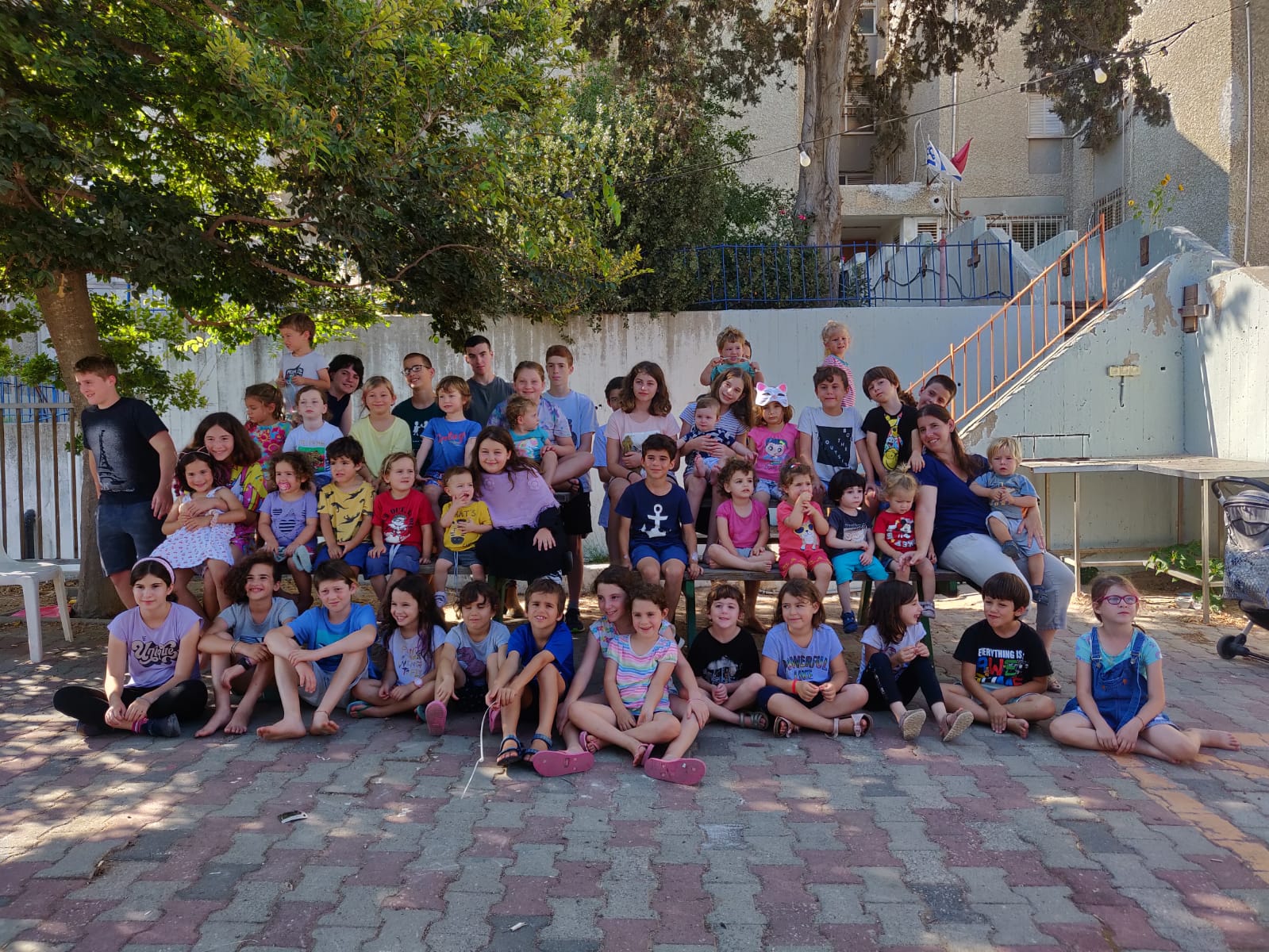
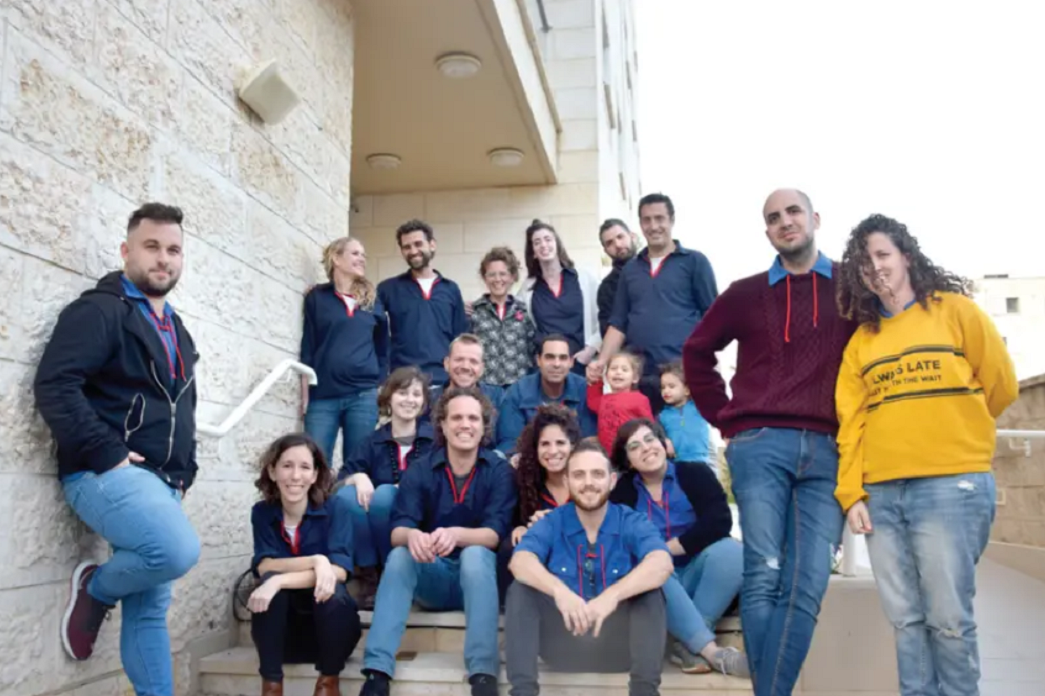
The urban kibbutzim vary considerably in size but are generally significantly smaller than their rural equivalents. The movement comprises several thousand urban communards, organised into small groups of around 10 to 15 people (called kvutsot). Most kvutsot are, in turn, networked into larger structures, called urban kibbutzim. In addition, a small number of stand-alone communities also self-identify as urban kibbutzim.
These communities are remarkably heterogeneous, reflecting the urban communards’ desire to break what they experienced as conformity and a stifling of innovation—or as several interviewees described it, “majoritarian tyranny”—within the conventional, rural kibbutz. The urban kibbutz movement prioritizes autonomy over equality; the individual and the small group over the collective.
Consequently, in place of the mass democratic structures that prevail in the rural kibbutz, where decisions are made partly by professional managers and partly by majority voting of members in large general assemblies, the urban kibbutzim have developed a much more intimate and participatory governance model in which decisions emerge from discussions within and between the two scales of kibbutz and kvutsot. In principle, this is a strongly bottom-up model in which the position adopted by the kibbutz cannot be imposed on the kvutsot. The model is often referred to by urban kibbutzniks as “dialogic communalism,” borrowing from the thinking of philosopher Martin Buber.
All of this results in a high degree of heterogeneity both within and between urban kibbutzim.
Perhaps the most obvious contrast here is between individual stand-alone kibbutzim such as Migvan and Tamuz and those belonging to wider networks. While the latter see themselves as movements with clear aspirations to grow—in terms of membership and geographical spread—and to create structures to enable viability beyond the current generation of kibbutzniks, the former are more inclined to self-define as “one-generation communities,” consciously avoiding the danger of ossification (which they tend to see as being the fate of the conventional kibbutz).
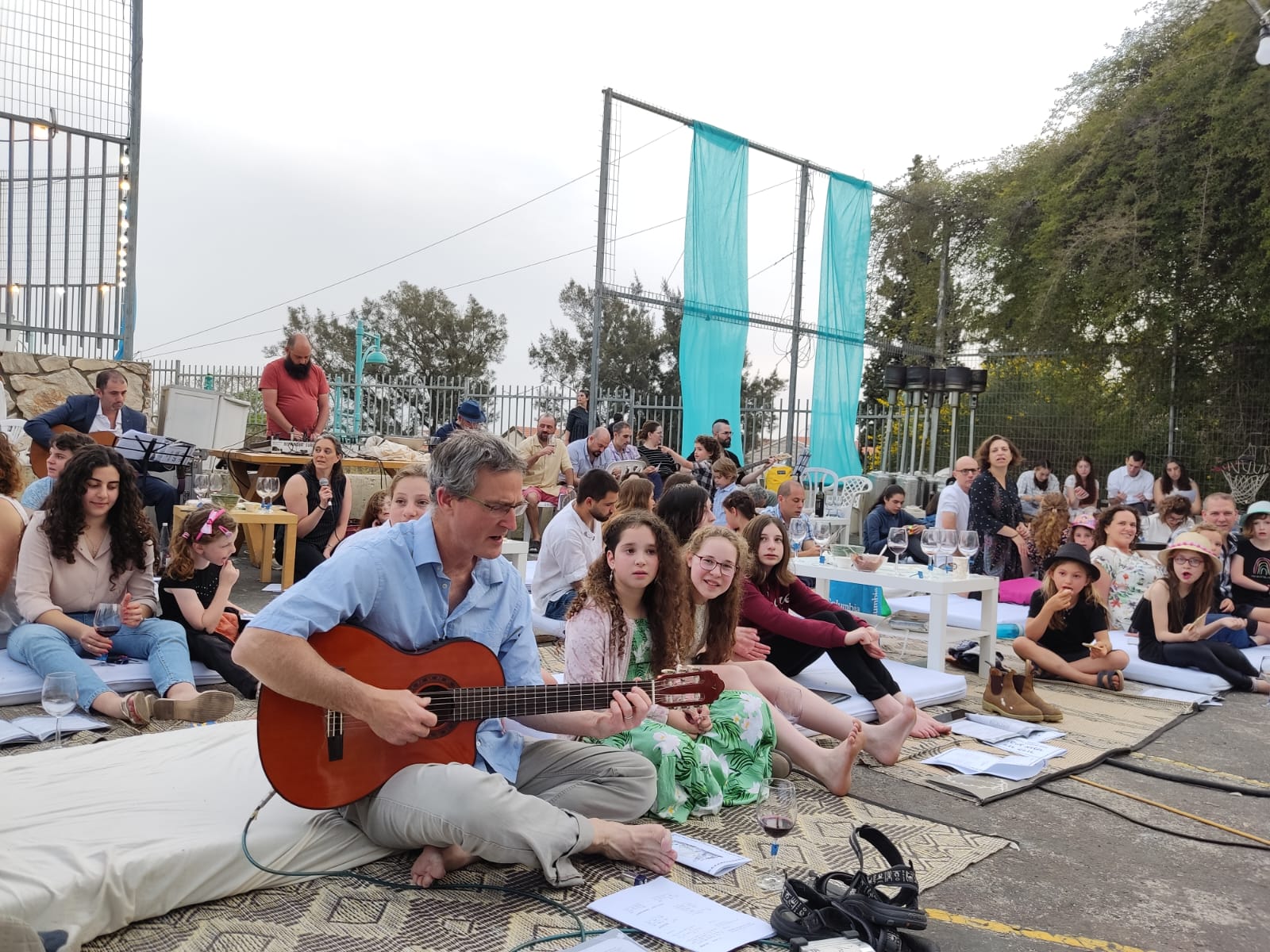
There are also fluid differences in internal organisation and structures. In the Migvan community located in Sdoret, for example, three levels of participation have emerged among the 70 adult kibbutz members: all pay tithes to enable the maintenance of the community centre and take part in rituals to mark the Jewish calendar; 12 buy food collectively; and nine at the core of the initiative pool and share equally their incomes. At the other end of the spectrum, in many urban kibbutzim all members adhere to common-purse sharing of income, distributed on the basis of need or equal allocation for all members.
The residents of Mishol urban kibbutz in Nof HaGalil initially had a policy that all children would go to the same school (so as to avoid the emergence of cliques among the children), but then changed policy when it was recognised that different children had different educational needs. Some urban kibbutzim meet all their transport needs by way of carpools and discourage private ownership of vehicles, while others tolerate both private and communal ownership.
The urban kibbutzim feature a rich mosaic of structures, systems, and behaviours that defy neat categorisation. No policy is etched in stone and all are potentially subject to review and reform through conversation within multiple levels of community organisation.
Despite such sharp contrasts—in terms of history, scale, mission, income-generating strategies, and governance—the traditional rural and the emergent urban models of the kibbutz share a common lineage.
For both, the Jewish youth movements (located both in Israel and the diaspora) have been a hugely important source of members. Many of those involved in the urban kibbutz movement consciously seek to address what they perceive as the weaknesses and failures of the conventional model and indeed, a good number of them were brought up in rural kibbutzim. Both models locate their mission with reference to the Jewish concept, Tikkun Ollam, meaning “Repair the World.” In the words of a manifesto created by one urban kibbutz, “Old model, new mission, with a modern pioneering zeal and a passion for social justice, young Israelis are re-imagining the kibbutz, planting scores of collectives in disadvantaged neighbourhoods across the country.”5
In short, the urban kibbutz can be seen as a conscious evolutionary adaptation of the original model.
The urban kibbutzim are already affecting the evolution of the wider Israeli society. Some cases in point:
Dror Israel emerged from one of the largest youth movements in the country, Hanoar Haoved Vehalomed (Working and Studying Youth). It includes 1,300 trained educators in 15 communities on the social and economic periphery. According to its website, Dror Israel activists “live in the neighborhoods we serve, bridging gaps, solving local problems. Through our youth movement, schools, and local and national programming, we better the lives of 150,000 people every year.”6
When COVID-19 hit, Dror Israel responded by opening day-care centres for the children of doctors, nurses, and healthcare workers; keeping open its high schools for youth at risk; delivering groceries and medicines to homebound seniors and those in need; and providing online educational programmes for thousands of teens.
The pedagogical dimension of Dror Israel’s educational work is pleasingly innovative, drawing on various traditions including Montessori and Waldorf. This approach has been encapsulated in a course co-developed with and taught in the Beit Berl teacher training institute. The focus is on project-based learning with, in several of the urban kibbutzim visited (Mishol and Reshit), greenhouses at the heart of the learning space. Dror Israel has eight schools under its own name and additionally, Dror Israel teachers work in many state-owned schools, where they are generally welcomed due to their high levels of expertise and commitment.
By no means all of these educators and other social activists live together in communes. However, the 15 residential Dror Israel kibbutzim provide important hubs and focal points for the network’s outreach work. All of the kibbutzniks I interviewed believed that the urban kibbutzim act as important catalysts for community activities including bridge-building between different ethnicities, organic and urban agriculture, beekeeping, and the inclusion in community activities of people with special needs. A number pointed to important informal alliances developing between urban kibbutzim and local municipalities. In one case, that of Haifa, the city council asked members of the Dror Israel youth group to form a kibbutz in a deprived neighbourhood in order to work with at-risk children.
Several of the urban kibbutzim I visited have spawned NGOs that have outgrown the kibbutz and now stand alone as independent organisations. The Gvanim Association for Education and Community Involvement, for example, emerged from the Migvan urban kibbutz as a vehicle for empowering and integrating into society people with physical, cognitive, and mental challenges. Today, over 35 ongoing Gvanim projects nationwide help over 2,000 participants become more fully active members of their communities. The model also includes sheltered housing where people with disabilities live alongside Gvanim staff members, rather along the lines of Camphill communities.7 While the CEO is a member of the Migvan kibbutz, Gvanim now operates as an independent organisation.
Similarly, the Bustan initiative was born out of a desire by members of the Mishol urban kibbutz to promote dialogue, collaboration, and solidarity between Jews and Arabs in the northern city, Nof HaGalil. Bustan hosts courses in Hebrew and Arabic, counters racism including providing support to those who have been victims of racially motivated attacks, and organises trips into natural environments outside of the city. It is collaborating with the municipality to develop productive and leisure-based green spaces in the city.8
The Tarbut (in English, “culture”) movement has grown from an original core group of six young graduates in the marginalised, multi-ethnic city of Afula to a network of around 300 artists: musicians, thespians, painters, and all manner of other artists scattered across various towns in the north of the country. Many of these artists choose to live communally, generally in groups (kvutsot) of five to 10 people, that tend to be federated into larger units (urban kibbutzim) of between 15 and 20 artists. There is a significant level of sharing both of incomes and resources; everything from art materials to costumes and studio spaces. A cofounder of the movement, Hadas Goldman, is in no doubt that the communal dimension of their lifestyle choice lends greater power and effectiveness to their work. At the most obvious level, income-sharing enables members to be supported in taking breaks between projects. The potential for creative collaboration between artists who might not otherwise interact is also enhanced.
Tarbut is active on multiple fronts including the creation of a theatre in Afula, co-creating a national coalition of cultural institutions, lobbying the government on cultural issues, and creating a poetry incubator to promote collaboration between writers in all the languages represented in Israel. Its most iconic project to date is the renovation as a community resource of the old market in Afula which had been a hotbed of drug abuse and crime.
Many of the urban kibbutzniks interviewed were insistent that their activities are not to be understood as some form of Jewish philanthropy. Hadas Goldman at Tarbut sees their mission as being to move beyond “service delivery” to enter into partnership with local people in defining and responding to their needs. This echoes the strong orientation towards democratisation of social service design and provision evident in many progressive cities internationally under the banner of “co-production.”9 Goldman declared that “Artists have a social responsibility to shape the society they live in and to not disconnect from social problems.” She sees the importance of creating the theatre in Afula in terms of shifting the current paradigm in which “culture is created in Tel Aviv and consumed in the rest of the country.”10
A high degree of political awareness is evident and most urban kibbutzniks interpret their role as that of catalysts for the emergence of a more just and sustainable society. One kibbutznik in Tamuz declared: “If you want to change the world, make it your day job!”11 Another said: “Tamuz is a new type of community. The freedom of man [sic] must be expressed in every moment of communal life.”12
This solidarity and coherence of purpose is grounded in a deep study of ideological sources. In all of the urban kibbutzim visited, members allocate generous time to exploring group dynamics, governance, and the historical and philosophical roots of the movement. Strikingly, many of the same thinkers who inspired the original kibbutz pioneers a century ago—especially philosopher Martin Buber and anarchist theorist Gustav Landauar— are commonly referenced, as is the concept of Tikkun Ollam. In short, there is a distinctively Jewish flavour to the urban kibbutz model, even if for many secular Jewish kibbutzniks, the scriptural sources are not of central importance. One referred to “my own personal tikkun” (as opposed to that described in the Jewish scriptures) as a source of inspiration. The website of Tamuz urban kibbutz captures the role of the Jewish tradition well: “Judaism has always changed with the times, and as a secular Jewish community with a secular Jewish identity, we encourage the study and continued cultivation of Jewish ‘tradition’ to suit a changing and developing world.”13
Accelerating climate breakdown, biodiversity loss, and the brittleness and vulnerability of current systems—for the provision of food, energy, transport, housing, and so on—make the experience of radical experiments in decentralised, community-based governance and provisioning, such as the urban kibbutz, more relevant than ever. As globalized systems come under growing strain, the ability of communities, and of the bio-regions within which they are embedded, to provide for their own needs and develop systems of self-governance is likely to become increasingly and urgently important. The urban kibbutz—characterised by groups of people simultaneously co-creating their own vibrant communities while acting as focal points for the empowerment of the disadvantaged communities within which they are embedded—embody what is needed in crucial ways.
Could this approach succeed elsewhere as well? Factors specific to the Israeli context have certainly helped the urban kibbutz model to flourish. Despite 40 years of neoliberal policies, Israel has a long and proud history of socialist thinking and organizational structures, with a very strong trade union movement and history of workerowned industry. The kibbutz movement was central in the birth and defence of the nation, conferring a level of recognition and respect to kibbutzim in general, and normalising the commune as a culturally legitimate form of social organisation. Perhaps most important, young Israeli citizens often bond deeply through their experience in the youth groups and in military service, generating a depth of solidarity with cohorts that has led to the formation of many of the kvutsot.14
That said, echoes of the Israeli experience may be found in the broader intentional communities movement internationally. The nearest international equivalent to the kibbutz is the ecovillage and, while there are significant differences between the two models, both involve the creation of self-governing communities that seek to play an important role in innovating and educating about more community-oriented forms of social organisation. Several kibbutzim, notably Lotan in the Negev desert, are members of the Global Ecovillage Network, and the ecovillage and kibbutz families get together regularly for joint conferences and other activities.
As in the traditional kibbutz, there has been a progressive liberalisation of ecovillage norms in recent decades, with a dilution of many of the more egalitarian features such as income sharing and communal land ownership. In recent years many ecovillages have developed a greater outward and more socially engaged focus in their activities than they had at the outset. Recent decades have brought a deeper integration of ecovillages into their immediate hinterlands—a transition I described in a previous article as being from “islands” to “networks.”15 Where (with notable exceptions) ecovillages had previously tended to be primarily inwardly focused, they have increasingly become hubs for various activities relating to social and ecological justice. Today the areas surrounding ecovillages are often unusually rich in terms of sustainability-related initiatives and networks.
Intentional communities can function as transformative cells within wider community networks; with official support, they may play this role even more powerfully. Michel Bauwens, founder of the P2P (peer-to-peer) Foundation, proposes one such vehicle in the form of what he calls public-commons partnerships (these stand in contrast to the public-private partnerships that have proliferated in the neoliberal decades as a mechanism for private sector investment in public infrastructure projects). “Commonification,” argues Bauwens, “consists of democratization, bringing back elements of direct self-government and self-managing by the residents themselves of goods and services of general interest.”16
Municipal authorities can enter into ongoing relationship with citizens’ groups and social movements in the design and delivery of community-facing facilities and services. Building on a model initiated in Bologna, Italy (the Bologna Regulation for the Care and Regeneration of Urban Commons), this approach “starts by regarding the city as a collaborative social ecosystem. ... [T]he Bologna Regulation sees the city’s residents as resourceful, imaginative agents in their own right. Citizen initiative and collaboration are regarded as under-leveraged energies that—with suitable government assistance—can be recognized and given space to work. Government is re-imagined as a hosting infrastructure for countless self-organized commons.”17
In a context of progressively more serious disruption to urban systems, municipalities can benefit greatly by calling upon the accumulated experience and intelligence of communities and creating alliance with the organisations embedded within them.
I find it enormously cheering in an age characterised by high levels of cynicism, hedonism, and despair to come across, in the urban kibbutzim and beyond, such committed and cheerful engagement for the common good. However, beyond this we may also be seeing the emergence of cells of community-level self- organisation capable of generating networks of mutual aid of precisely the sort we are going to need.
Jonathan Dawson (This email address is being protected from spambots. You need JavaScript enabled to view it.) is a fellow of Schumacher College where he created the innovative Regenerative Economics postgraduate programme, which he led for its first 11 years. Formerly a long-term resident at the Findhorn ecovillage and a former President of the Global Ecovillage Network, he has 15 years’ experience as a researcher, author, consultant, and project manager in the field of small enterprise development in Africa and South Asia. Jonathan is the principal author of the original Gaia Education sustainable economy curriculum, drawn from best practice within ecovillages worldwide, that has been endorsed by UNITAR and adopted by UNESCO as a valuable contribution to the UN Decade of Education for Sustainable Development. He has a particular interest in the transformative power of critical, embodied pedagogy.
- “Kibbutzim” (plural of kibbutz) is used to define the distinctive Israeli communes that emerged from the early decades of the 20th century. Kibbutzniks are those who live in them.
- Abramitzky, R., The Mystery of the Kibbutz: Egalitarian Principles in a Capitalist World, Princeton University Press, 2018, p. 83.
- Quoted in Horrox, J., Living Revolution: Anarchism in the kibbutz movement, AK Press, 2009, p. 87.
- Gavron, D., The Kibbutz: Awakening From Utopia, Rowman & Littlefield Publishers, 2000, p. 11.
- Kraft, D., “Kibbutz in the city? The healing mission of Israel’s new communes,” Christian Science Monitor, 2019.
- See www.drorisrael.org.
- See www.camphill.org.uk.
- Segal, D., Kol He’Chalutz podcast, May 19, 2019.
- Boyle, D. and M. Harris, The Challenge of Co-production: How equal partnerships between professionals and the public are crucial to improving public services, New Economics Foundation, London, 2009.
- Goldman, H., Kol He’Chalutz podcast, June19, 2019.
- Personal interview, February15, 2023.
- Personal interview, February15, 2023.
- See radjew.wordpress.com/inspiring-pioneers-tamuz.
- It needs, nonetheless, to be noted that for a good number of young Israelis, their experience in the army—or even the prospect of serving in the army in any capacity—is deeply alienating and sufficient for them to choose self-exile over remaining in the country.
- Dawson, J., “From Islands to Networks: a history of the ecovillage movement,” 2013.
- Bauwens, M., “The Public–Commons Partnership and the Commonification of that which is ‘Public,’” blog.p2pfoundation.net/the-public-commons-partnership-and-the-commonification-of-that-which-is-public/2012/08/14.
- See wiki.p2pfoundation.net/Bologna_Regulation_for_the_Care_and_Regeneration_of_Urban_Commons. To date, the city of Bologna and citizens have entered into more than 90 different “pacts of collaboration”—formal contracts between citizen groups and the Bolognese municipal government that outline the scope of specific projects and everyone’s responsibilities. The projects fall into three general categories—living together (collaborative services), growing together (co-ventures), and working together (co-production).